Should the job use a cable machine or hydro jetting?
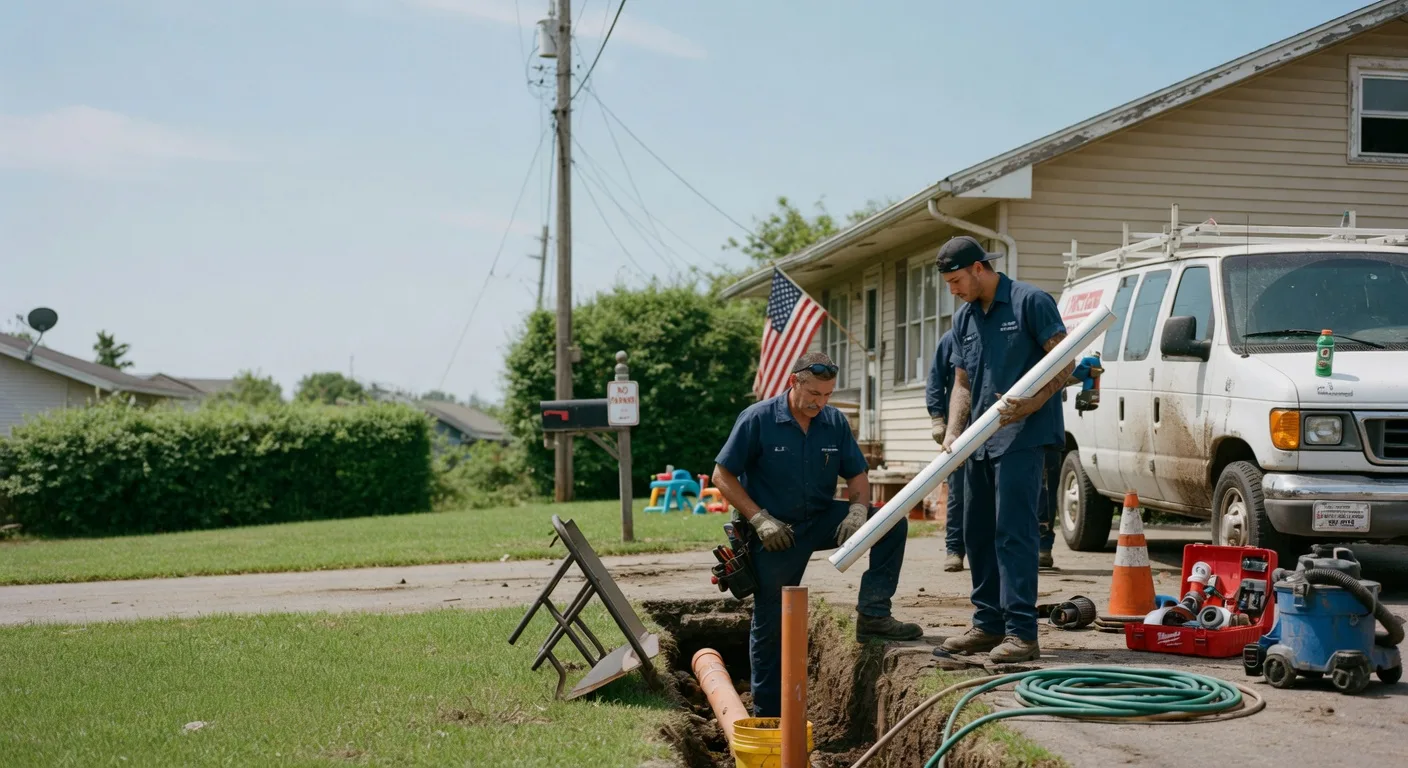
It depends on what is in the pipe and how far it reaches. A cable machine, sometimes called a snake, is usually enough for a localized clog from hair, paper, or a small root intrusion. The rotating cable punches a channel through the blockage and restores flow, and for a single slow bathroom sink or tub that is all the job needs. The limit of a cable is what it leaves behind. It opens a hole through the middle of a clog, but grease, scale, and sludge stay stuck to the pipe wall, so the line narrows again within weeks. Hydro jetting sends high-pressure water through the line and scours the full interior wall. It is the better call for grease coating a kitchen line, recurring clogs in the same spot, roots that were cut back once and returned, or a line that keeps slowing down after cabling. A jetter needs a reachable cleanout, and it is not right for a pipe that is cracked or collapsing. That is where a camera comes in. A camera inspection shows the pipe's condition before the plumber chooses a method. The plumber decides after seeing the line, and that choice affects the cost of the visit for a home in Wingate, IN.
One practical point is that the choice is not always made in advance. A plumber often starts with a cable, finds out what is actually in the line, and then moves to a jetter if the cable returns with grease or sludge instead of a clean break. For that reason it helps to ask which method is planned and what would make the plumber change course. Jetting also depends on pipe condition, which is another reason a camera sometimes comes first on an older line. Clay and cast iron that are thin, cracked, or shifted can be damaged by high pressure, while newer plastic pipe handles it well. Water use matters too: a jetter sends a lot of water into the line, so the drain has to be open and flowing downstream. After either method, run water for several minutes and watch for slow spots or gurgling that might mean something is still in the way.
My bathroom sink drains slowly but the stopper is clean. What else could it be?
If you have pulled the stopper and cleaned off the hair and soap film and the sink still drains slowly, the restriction is further down. The stopper mechanism is only the first few inches. Most of the slowdown lives in the pivot rod area, the tailpiece, the trap, or the pipe beyond it.
The common cause is a layer of soap scum, toothpaste and hair that binds together on the pipe wall. It narrows the pipe a little each month, and the sink slows long before it stops.
Safe checks you can do: set a bucket under the sink and unscrew the trap. Clear out what you find and rinse it. Look at the short pipe going into the wall for build-up you can reach with a bottle brush. Fill the basin and let it run, then watch whether the water drains evenly or with a gurgle. Skip chemical cleaners, which can soften plastic fittings and leave caustic liquid sitting in the trap.
Gurgling is a clue. A sink that drains slowly and gurgles can point to a blocked vent, because the drain cannot pull air behind the water. If the toilet or shower near that sink also acts up, the blockage may be in the shared branch line or the main drain, not the sink itself.
One slow sink with everything else normal usually means a local clog, and a cable machine through the trap arm is enough. If the pipe clears and slows again within a few weeks, a camera inspection can show whether the pipe wall is scaled over or has a sag that holds water. Heavy scale or soap buildup in the branch line may call for hydro jetting.
Call and stop using the sink if you see water leaking from the trap or the wall, if sewage smells from the drain, or if several drains in the house slow at once. That pattern usually means the main line is partly blocked.
Cost depends on how easy the pipe is to reach, whether the cleanout is nearby, how far the plumber must run the cable, and whether any worn pipe has to be replaced.
Expert Plumbers Co can connect you with an independent local plumber in Wingate, IN when you call (380) 262-9173.
My dishwasher leaves standing water at the bottom and the kitchen sink is slow too. Are they connected?
Yes, most of the time. The dishwasher drains into the same pipe as the kitchen sink, usually through the disposal or a connection on the tailpiece. If that shared pipe is partly blocked, both will slow down, and the dishwasher shows it first because it cannot push water out against the restriction.
Grease, food residue and soap film coat the inside of the kitchen drain and narrow it over time. A garbage disposal can pack ground food into that narrow spot. The result is water that sits in the bottom of the dishwasher after a cycle and a sink that empties slowly.
Safe checks you can do: look at the dishwasher filter at the bottom and clear any food. Check that the drain hose is not kinked behind the machine. If you have a disposal, make sure the knockout plug was removed when the dishwasher was installed. Run the disposal with cold water and see whether the sink drains better. Take off the trap under the sink with a bucket below, and clear what is in it. Skip chemical cleaners, which can damage the dishwasher hose and the disposal.
If the filter and trap are clean and both problems remain, the blockage is further down the kitchen line. A cable machine often clears a soft plug of grease and food. If it returns in a few weeks, grease on the pipe wall is the likely cause, and hydro jetting cleans the wall where a cable only cuts a hole through it. A camera inspection can show a sag, a damaged joint or roots further along.
Stop running the dishwasher and call if dirty water comes up in the sink during a cycle, if other drains in the house are also slow, or if you smell sewage.
If the sink drains fine once the dishwasher is off and the problem is only the machine, the cause may be in the appliance, such as the pump or drain hose, and that is a job for an appliance technician rather than a plumber.
Cost depends on access under the sink, how far the blockage sits, whether a cleanout is available, and how much has to be opened or replaced.
Expert Plumbers Co can connect you with an independent local plumber in Wingate, IN when you call (380) 262-9173.
We are buying a house. Is a sewer camera inspection before closing worth it, and what does it find in older homes?
A standard home inspection covers what can be seen and reached. It does not follow the main drain out under the yard, and that buried pipe is where the expensive surprises sit. On an older house, a camera inspection of the sewer line before closing is usually worth doing.
A plumber feeds a small waterproof camera down the line, normally through a cleanout, and watches the pipe on a screen. The run goes from the house toward the street connection, and the plumber notes how far along each problem sits.
Here is what tends to turn up in older homes:
Tree roots in clay or concrete pipe, entering at joints. They look like fine hair or a thick mat.
Cast iron that has scaled up inside, narrowing the bore, or has cracked along the bottom.
Fiber pipe made of tar and wood pulp, which can go oval and collapse over time.
A bellied section, where the pipe has sagged and holds a pool of water.
Offset or separated joints where the soil has moved, and old broken sections from past digging.
Ask for the video or screenshots, and for the distance of each defect from the cleanout. That gives you something concrete to show your agent and the seller. A root problem that a cable machine or hydro jetting can clear is a very different matter from a collapsed section that needs digging or a trenchless liner. What a repair costs depends on depth, access, how much yard, driveway or slab has to be opened, the materials, and local permit rules. Those are the things to ask a plumber about once the footage is in hand.
Two practical points. First, find out whether the cleanout is reachable, and tell the seller you need access during your inspection window. Second, a camera cannot see through a line that is full of water or packed solid, so the plumber may need to clear it first. If the seller says the line has never given trouble, that is useful, but it does not show the condition of the pipe.
Ask also whether the lateral is shared with a neighbor, since that changes who deals with a defect.
Expert Plumbers Co can connect you with an independent plumber in Wingate, IN for this: call (380) 262-9173.
Our cabin or second home sat empty for months and now the drains smell and run slowly. Why?
You open the cabin for the first time in months and the drains smell like a sewer and the water creeps away.
Every fixture has a trap, the curved section that holds a little water to block sewer gas. With no use, that water evaporates. Once the seal is gone, gas comes straight up the drain. The film left in the pipe also changes while the house sits. Soap, grease and food residue dry and harden on the pipe wall, so the first heavy use narrows the line and water slows down. Then there is the line itself. A vacant house can still have roots working into a clay or cast iron joint, and nobody was flushing them back with daily flow.
If one sink or tub is slow and the others are fine, the problem is probably local to that fixture, its trap or its branch line. If every drain is slow, several fixtures gurgle, or the toilet bubbles when you run the washer, the blockage is further down, in the main line or the lateral to the street.
Safe homeowner check: run water in every fixture for a couple of minutes, including rarely used ones, to refill the traps. Pour a cup of water into floor drains. If the smell fades and the flow picks up after a day or two of normal use, dried traps and loosened residue were likely the whole story.
Stop running water and call now if wastewater comes up in a tub, shower or floor drain, if the toilet will not clear, if the smell stays strong after the traps are filled, or if you see wet floors, stained ceilings or sagging drywall.
A cable machine is enough when the clog is residue or a soft plug in one branch. If the line stays slow after cabling, if roots are suspected, or if grease has coated the full pipe wall, the plumber will usually recommend hydro jetting, which scours the pipe wall with high pressure water. A camera inspection settles the question of roots, a belly holding water, or a failed lateral.
Expert Plumbers Co is a referral service. We connect you with an independent local plumber in Wingate, IN. Call (380) 262-9173.
Before you book, tell the plumber how long the house sat empty, whether it was winterized, and which drains are affected. Ask whether they plan to cable, jet or run a camera first, and what they will do if the camera shows roots or a damaged section. The scope depends on access to the line, the parts or pipe needed, how much has to be opened up, and whether a permit or code step applies to a repair.